"This automation will save you 10 hours a week!"
Great. But can I trust it?
The Speed Trap
Most automation is sold on speed:
- "Process 100 files in 5 minutes!"
- "Automate your workflow 10x faster!"
But speed without trust is dangerous.
Example: An automation processes 100 invoices in 5 minutes. But 10 of them are wrong.
You spend 2 hours debugging and fixing the errors.
Total time saved: -1 hour.
Confidence Is the Real Metric
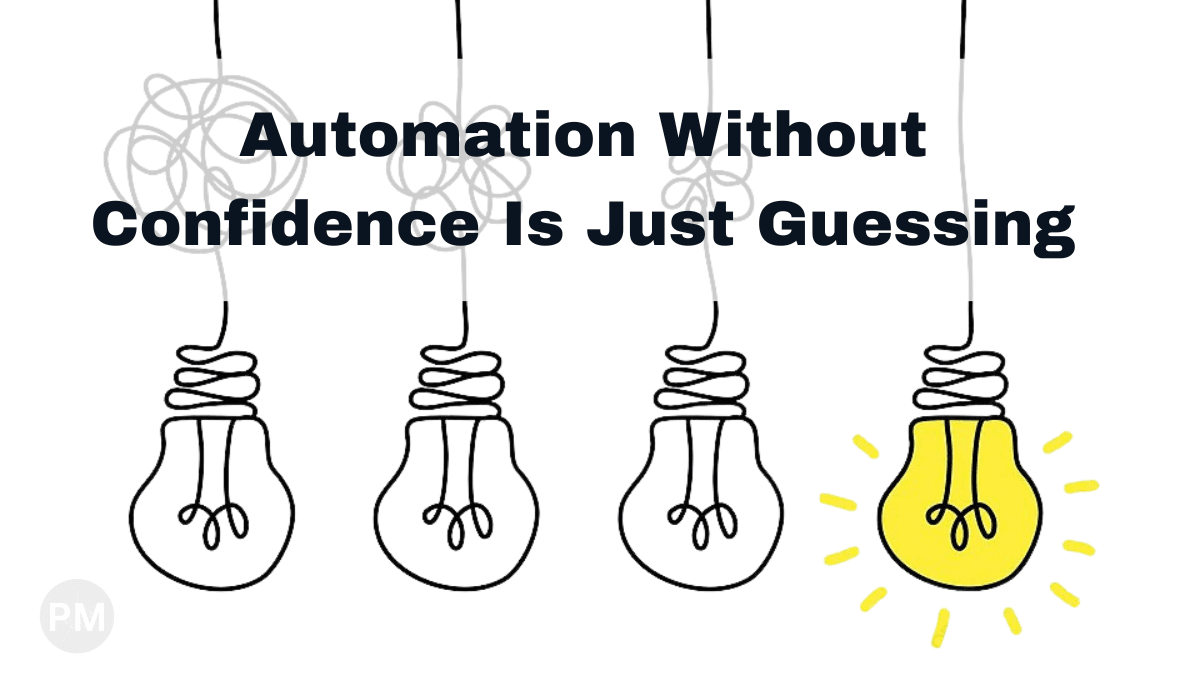
The value of automation isn't time saved. It's confidence gained.
Ask yourself:
- Can I confidently use this output without manually checking it?
- Do I trust this automation to run while I sleep?
- Would I stake my reputation on these results?
If the answer is "no," the automation isn't ready.
How to Build Confidence
1. Log Everything
Confidence comes from visibility.
If you can see what the automation did, you can trust it.
2. Flag Uncertainty
Don't hide failures. Highlight them.
My Document AI tool flags low-confidence extractions in yellow. This tells the user: "Check this one before using it."
3. Enable Auditability
Users should be able to trace back from result → process → input.
If someone questions a result, you can show them exactly what happened.
4. Fail Gracefully
When automation breaks, it should:
- Log the error
- Notify someone
- Not corrupt data
Silent failures kill trust.
Speed vs. Confidence Trade-Off
Sometimes, you choose speed over confidence (e.g., quick prototypes).
But in production, confidence always wins.
A slower, more reliable tool will get more use than a fast, brittle one.
Conclusion
Don't optimize for speed. Optimize for confidence.
Build automation that stakeholders trust:
- Log everything
- Flag uncertainty
- Enable auditability
- Fail gracefully
When people trust your automation, they use it. When they don't, it dies.